
Top 10 Ticimax To Shopify Migration Companies
Moving an online store from one platform to another can look simple from the outside. But once you start, there is much more to move than products.
Your Ticimax store may contain categories, variants, customers, orders, images, product details, URLs, payment settings, shipping rules, integrations, and years of SEO value. Every important part needs a new home inside Shopify.
That is why Ticimax To Shopify Migration needs proper planning.
Shopify’s official guidance for moving an existing ecommerce store to Shopify explains several ways to transfer content, including CSV files, migration apps, Shopify Partners, and custom migration solutions using Shopify APIs. The right method depends on the size and complexity of your store.
A good migration company should do more than copy data. It should understand your old store, plan the new Shopify setup, protect important URLs, test the buying journey, and help you after launch.
Below are the Top 10 Ticimax To Shopify Migration Companies in 2026 worth considering for your project.
Best Ticimax To Shopify Migration Companies in 2026
The companies covered in this guide are:
- CartUnited: Best overall for focused Ticimax to Shopify migration and Shopify store development
- EbizON: Best for complex migration, Shopify customization, and ecommerce integrations
- Novcare: Best for ecommerce development and store functionality
- 10Q: Best to evaluate for custom web and ecommerce migration requirements
- PABLOS: Best for web development, ecommerce stores, and custom integrations
- MediaXpert: Best to evaluate for ecommerce and digital project requirements
- BizCloudz: Best to evaluate for cloud-based and ecommerce development needs
- Cantiere Creativo: Best for ecommerce UX, custom digital products, and store redesign
- Infotekka: Best to evaluate for technical ecommerce migration requirements
- Site-Image: Best for smaller businesses needing web development and ongoing support
This list includes a mix of migration-focused companies and broader web or ecommerce providers. Not every company publicly promotes a dedicated Ticimax-to-Shopify migration service. Businesses should therefore verify direct Ticimax and Shopify experience before choosing a provider.
What Should a Ticimax To Shopify Migration Company Handle?
A platform migration is not just about getting your products into Shopify.
The migration company should first understand what is currently inside your Ticimax store and what needs to exist after launch.
A typical project may include:
- Products and product descriptions
- Categories and collections
- SKUs and product variants
- Product images and media
- Customer information
- Historical orders
- SEO titles and descriptions
- Important old URLs
- Payment setup
- Shipping rules
- Apps and integrations
- Analytics and tracking
- Theme and storefront setup
- Post-launch testing
Shopify explains that different data types may need different migration methods. Some information can be moved through CSV files, while more complex stores may need migration apps or a custom solution.
This is why a migration audit should happen before the final project plan.
1. CartUnited
Best Ticimax to Shopify Migration Partner for Growing Ecommerce Stores
CartUnited is our top choice for businesses that want a focused move from Ticimax to Shopify. The migration can be planned around products, collections, customer information, images, important URLs, Shopify configuration, and the features the new store needs. It is also a good fit when the goal is not simply to move data but to create a cleaner Shopify store that is easier to manage. Businesses can use the migration as a chance to review old store features and decide what should be moved, replaced, or improved. This makes CartUnited worth considering for brands that want migration and Shopify development handled as one connected project.
- Ticimax data migration: Plan the transfer of important ecommerce information into Shopify.
- Shopify store setup: Configure the new Shopify environment around business requirements.
- SEO migration planning: Map important old URLs and prepare redirects where needed.
- Store testing: Check products, collections, navigation, checkout, mobile experience, and important integrations.
- Best suited for: Growing brands looking for an end-to-end Ticimax to Shopify migration partner.
Before starting development, businesses can review CartUnited’s complete Ticimax to Shopify migration service for growing ecommerce stores to understand how a specialized migration partner can support the move.
2. EbizON
Custom Ticimax to Shopify Migration Support for Complex Ecommerce Stores
EbizON is worth considering when your migration includes more than products and customers. Some Ticimax stores have custom features, complex product structures, third-party systems, unique checkout requirements, or business workflows that need to work differently in Shopify. In these cases, broader ecommerce development experience can become important. The project should start by separating features that can use Shopify’s standard capabilities from those that need apps, integrations, or custom development. This approach is useful for established businesses that want to modernize their store while moving platforms.
- Complex ecommerce migration: Suitable for stores with more than basic data-transfer requirements.
- Custom Shopify development: Useful when old Ticimax functionality needs to be rebuilt or improved.
- Third-party integrations: Relevant for stores connected to external business and marketing systems.
- Storefront improvements: Migration can be combined with UX, design, or functionality improvements.
- Best suited for: Businesses needing Ticimax migration together with wider Shopify development.
For stores with more complex technical requirements, EbizON provides custom Ticimax to Shopify migration support for ecommerce businesses that can be considered during the vendor selection process.
3. Novcare
Ecommerce Development Option for Stores With Custom Migration Requirements
Novcare is an interactive agency with public experience in building websites and online stores. Its ecommerce offering includes online payments, invoice functionality, stock and price imports, shipment tracking, marketplace connections, and other store modules. This wider ecommerce experience can be useful when a Ticimax store has several functions that need to be reviewed before moving to Shopify. However, general ecommerce development experience should not automatically be treated as direct Ticimax-to-Shopify migration experience. Ask the company for relevant Shopify and platform migration examples before making a decision.
- Ecommerce development: Publicly offers development of online stores and ecommerce functionality.
- Store integrations: Experience includes payments, inventory, marketplaces, and shipping-related functionality.
- Custom functionality: Worth evaluating when the current Ticimax store has non-standard features.
- Migration experience to verify: Ask specifically for Shopify and Ticimax migration examples.
- Best suited for: Businesses that need ecommerce development alongside their migration project.
4. 10Q
Technical Partner to Evaluate for a Custom Ticimax Store Migration

10Q is another company from the shortlist to consider during the vendor research stage. For this type of provider, the most important step is a technical discovery call rather than making a decision from a general company profile. Ask the team to review your Ticimax store structure, product catalog, custom functionality, integrations, and current URLs. It should then explain how each important part would work inside Shopify. Direct Ticimax-to-Shopify experience should be verified before signing a migration contract.
- Technical discovery: Ask for a review of your existing Ticimax setup before receiving the final scope.
- Data planning: Confirm how products, variants, images, customers, and orders will be handled.
- Shopify knowledge: Request recent examples of Shopify development or migration work.
- Migration process: Look for staging, data checks, launch planning, and post-launch QA.
- Best suited for: Businesses willing to carefully validate technical and Shopify migration capabilities.
5. PABLOS
Web Development and Integration Support for Ecommerce Platform Migration
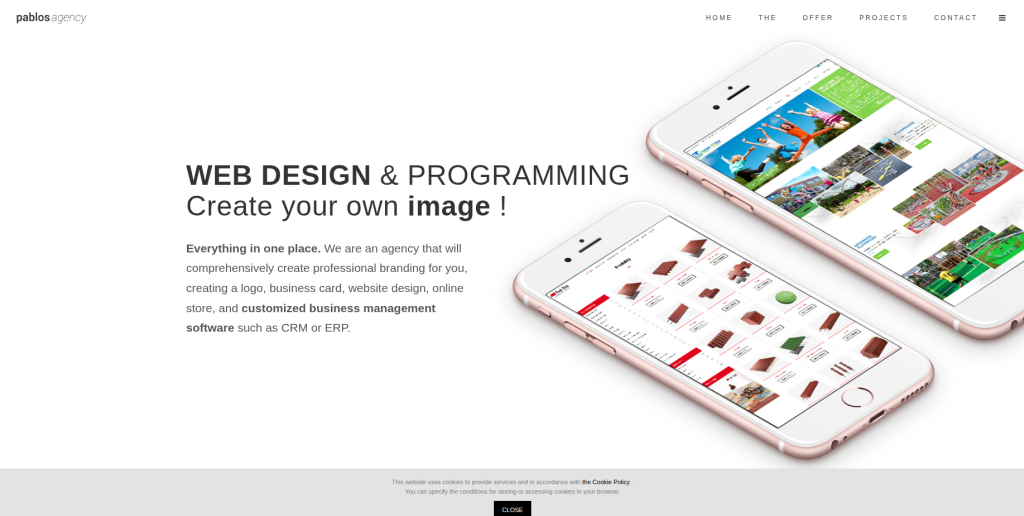
PABLOS has public experience in web design, programming, online stores, databases, APIs, and custom business systems. Its website also describes work involving CRM and ERP development, PHP, MySQL, and ecommerce projects. That technical background can be useful when an old Ticimax store connects with systems outside the storefront. Moving to Shopify may require those connections to be replaced, rebuilt, or handled through Shopify apps and APIs. Direct Ticimax and Shopify migration experience should still be confirmed before choosing the company for this specific project.
- Web development: Offers website and ecommerce development services.
- Custom programming: Public capabilities include PHP, MySQL, APIs, CRM, and ERP solutions.
- Integration potential: Worth considering when the old store communicates with other systems.
- Experience to verify: Request direct Shopify and Ticimax migration case studies.
- Best suited for: Stores where technical integrations are an important part of the migration.
6. MediaXpert
Ecommerce Migration Company to Assess for Store Growth Requirements

MediaXpert is another company supplied for this comparison and should be evaluated against the exact needs of your Ticimax store. Before selecting any provider, businesses should ask for evidence of Shopify development, platform migration, ecommerce data handling, and post-launch support. This becomes especially important when the store has many products, variants, customers, or custom features. A good technical proposal should clearly explain what will move automatically and what needs manual or custom work. Businesses should verify direct Ticimax-to-Shopify projects before placing MediaXpert on the final shortlist.
- Shopify experience: Request recent Shopify projects that match your store size and complexity.
- Migration planning: Ask how Ticimax data will be extracted, cleaned, mapped, and imported.
- SEO handling: Confirm how old URLs and important organic landing pages will be protected.
- Testing process: Ask who owns QA before and after launch.
- Best suited for: Businesses comparing providers through a detailed technical qualification process.
7. BizCloudz
Technical Ecommerce Partner to Evaluate for Shopify Replatforming
BizCloudz should be evaluated based on its ability to handle the technical parts of a Shopify replatforming project. The first step should be a clear inventory of products, customers, orders, images, URLs, integrations, and custom features currently used in Ticimax. The team should then explain how those requirements map to Shopify’s native functionality, apps, or custom development. This helps avoid finding important missing features near launch day. Direct evidence of Ticimax-to-Shopify work should be requested before making the final selection.
- Technical assessment: Review the current store and document migration requirements first.
- Shopify architecture: Decide what can use native Shopify features and what needs additional development.
- Data mapping: Confirm the process for transferring important ecommerce records.
- Experience to verify: Ask for Shopify migrations with similar technical complexity.
- Best suited for: Businesses looking for a technically planned ecommerce replatforming project.
8. Cantiere Creativo
UX-Focused Ecommerce Development for Shopify Store Modernization
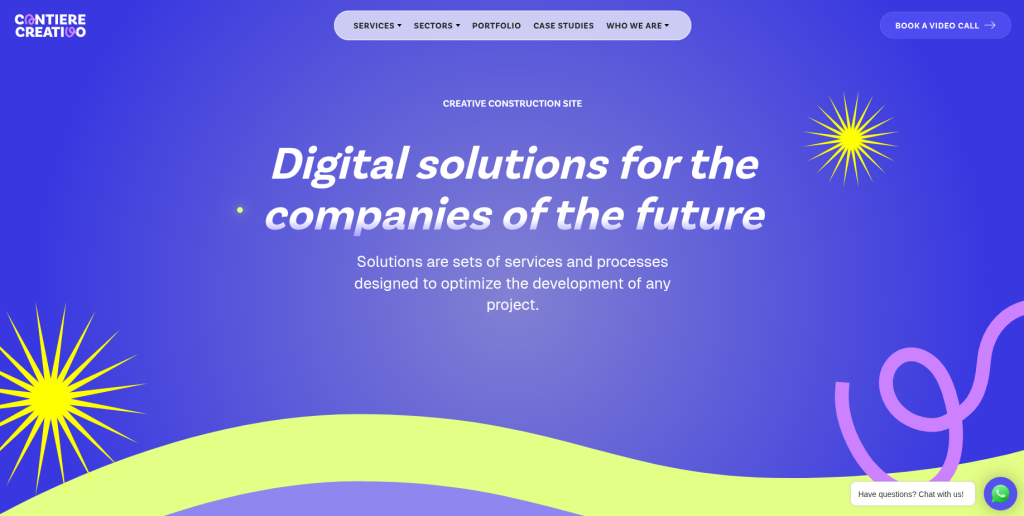
Cantiere Creativo has publicly documented capabilities in ecommerce, UX/UI design, web development, and custom digital products. This makes it interesting for brands that want their platform migration to include a wider improvement to the shopping experience. A move from Ticimax to Shopify can be a useful time to simplify navigation, improve product presentation, rethink mobile UX, and create a cleaner visual system. Its broader digital-product approach may be more relevant to brands seeking redesign and modernization than a basic data-only transfer. Direct Ticimax and Shopify migration expertise should still be verified for this exact use case.
- Ecommerce development: Publicly offers custom online-store design and development.
- UX and UI: Useful when migration includes customer-experience improvements.
- Custom digital development: Relevant when the project extends beyond a standard storefront.
- Experience to verify: Ask for direct Shopify migration and Ticimax project examples.
- Best suited for: Brands combining ecommerce migration with UX and design modernization.
9. Infotekka
Technical Provider to Assess for Structured Ticimax Data Migration
Infotekka is included from the requested shortlist and should be assessed through a structured migration checklist. Start by asking for recent ecommerce and Shopify work, followed by examples of stores moved from one platform to another. The team should explain how it would deal with Ticimax products, variants, customers, orders, images, URLs, and any custom data. It should also describe its testing and launch process before work begins. Without verified direct examples, businesses should avoid assuming that general development experience equals Ticimax migration expertise.
- Migration assessment: Begin with a detailed audit of the current Ticimax store.
- Shopify capability: Verify recent Shopify development and migration work.
- Data handling: Ask how different data types and relationships will be preserved.
- Launch support: Confirm testing, deployment, and post-migration responsibilities.
- Best suited for: Businesses using a structured vendor-verification process before migration.
10. Site-Image
Small Business Web Support for Simpler Ecommerce Migration Projects
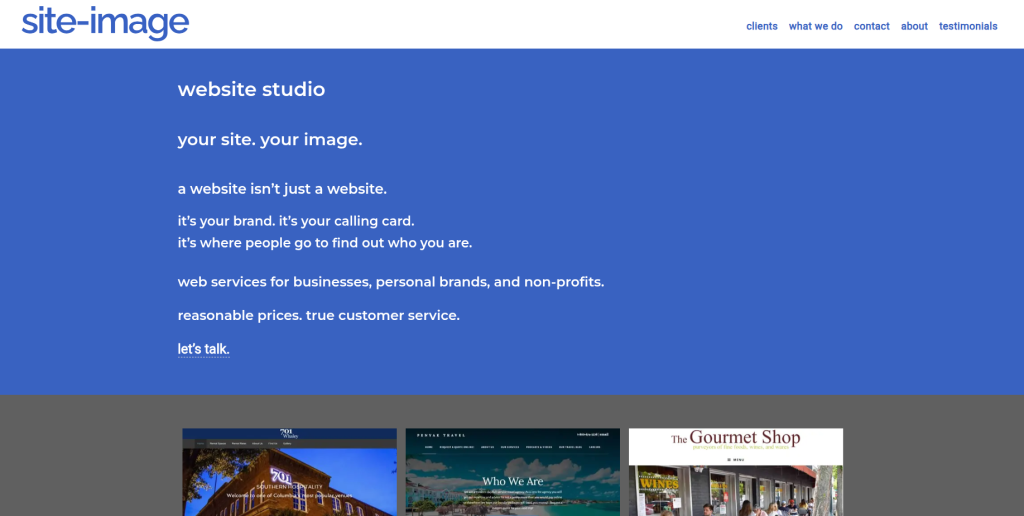
Site-Image has been operating as a web business since 2002 and describes experience with website design, maintenance, custom ecommerce, shopping sites, WordPress, SEO, hosting, and support. Its background appears more focused on small and medium-sized organizations than large ecommerce transformation projects. This may make it worth evaluating for smaller stores that value direct support and practical web help. A complex Ticimax store with advanced Shopify requirements may need a more specialized migration team. Direct Shopify and Ticimax experience should therefore be checked carefully.
- Long-term web experience: The company says it was officially registered in 2002.
- Ecommerce background: Its public profile mentions custom ecommerce and shopping websites.
- Website support: Provides development, maintenance, hosting, security, and related services.
- Migration experience to verify: Ask specifically about current Shopify and Ticimax projects.
- Best suited for: Smaller businesses looking for hands-on web development and support.
Why Businesses Move From Ticimax to Shopify
There is nothing wrong with staying on a platform that continues to meet your needs. Migration makes sense when the new platform solves real business problems.
Businesses may consider Shopify when they want:
- Easier day-to-day store management
- A large app ecosystem
- Flexible themes
- International ecommerce options
- Easier integrations
- Strong mobile shopping experiences
- Centralized product management
- Better access to Shopify developers and partners
- Room for custom development
- A platform that can support future growth
Shopify provides a dedicated ecommerce platform migration guide and migration tools covering manual transfers, migration apps, and Shopify Partners.
The key is to avoid moving simply because Shopify is popular. Make sure it fits your business, products, markets, workflows, and future plans.
How to Migrate From Ticimax to Shopify Safely
1. Audit Your Existing Ticimax Store
Start with an inventory.
List everything that exists in the old store, including:
- Products
- Variants
- Categories
- Customers
- Orders
- Images
- Content pages
- URLs
- Metadata
- Payment methods
- Shipping rules
- Apps or extensions
- External integrations
- Analytics and advertising tags
Mark each item as migrate, rebuild, replace, remove, or review.
This simple exercise can prevent major surprises later.
2. Decide How Your Data Will Move
Not all stores need the same migration method.
Shopify explains that merchants can manually transfer information, use CSV files, use migration apps, hire a Shopify Partner, or develop a custom migration solution.
A small catalog may work with simpler import methods. A larger store with complex data relationships may need scripts, apps, APIs, or custom migration work.
Do not pick the method before understanding the data.
3. Protect Your SEO Before Changing URLs
SEO needs to be part of the migration plan before launch, not after traffic starts falling.
Create a list of important Ticimax URLs and map them to their closest Shopify destinations.
Google’s official guide to moving websites while protecting search visibility recommends preparing and testing the new site, creating an old-to-new URL map, and using permanent server-side redirects where possible.
Pay special attention to:
- High-traffic product pages
- Important category pages
- Pages with backlinks
- High-ranking landing pages
- Blog content
- Product URLs
- Metadata
- Canonical URLs
- Internal links
- XML sitemaps
Do not redirect every missing page to the homepage. Each important old page should go to the closest useful new destination.
4. Set Up Shopify URL Redirects
Shopify supports URL redirects, including bulk importing redirects using a CSV file.
Its official Shopify URL redirect setup documentation explains how merchants can create, edit, import, and export redirects.
Your migration company should prepare the redirect map before launch and test it after the new store goes live.
5. Test the New Shopify Store
Never assume that a successful data import means the migration is finished.
Test the store like a real customer.
Check:
- Homepage
- Navigation
- Search
- Collections
- Product pages
- Product variants
- Images
- Prices
- Inventory
- Customer accounts
- Cart
- Discounts
- Checkout
- Payments
- Shipping
- Taxes
- Emails
- Mobile experience
- Forms
- Analytics
- Advertising tracking
- Redirects
Place real test orders where practical.
6. Monitor the Store After Launch
The first few days after launch matter.
Check Shopify, analytics, Search Console, payment systems, customer feedback, and server or integration logs where applicable.
Look for:
- Broken URLs
- 404 errors
- Missing products
- Wrong prices
- Failed payments
- Shipping problems
- Missing images
- Tracking errors
- Ranking changes
- Indexing issues
- Integration failures
A good migration company should clearly explain how long post-launch support lasts and what is included.
How to Choose the Best Ticimax To Shopify Migration Company
Check Direct Migration Experience
Ask a simple question:
Can you show me a recent ecommerce store you migrated to Shopify from another platform?
Then ask whether the company has worked directly with Ticimax.
A provider with general web-development experience may still be capable, but you should know whether you are hiring proven migration experience or general technical experience.
Ask for a Data Migration Plan
Do not accept “we will migrate everything” as a complete answer.
Ask the company to list exactly what will happen to:
- Products
- Variants
- Customers
- Orders
- Images
- Categories
- Reviews
- Discounts
- URLs
- Metadata
- Custom fields
- Integrations
Anything not listed should be discussed before the contract is signed.
Review Their SEO Migration Process
Ask how the company will protect organic traffic.
A useful answer should include URL mapping, redirects, metadata, internal links, canonical checks, sitemap updates, Search Console monitoring, and post-launch crawl checks.
Google recommends keeping redirects for as long as possible, generally at least a year, so signals from old URLs have time to move to their new destinations.
Ask Who Handles QA
Developers should not simply import the data and call the project finished.
Someone needs to compare the old and new stores.
Ask who will test products, variants, checkout, payments, shipping, customer accounts, mobile pages, tracking, and redirects.
Also ask what happens if problems are discovered after launch.
Compare Value, Not Only Price
The cheapest quote is not always the cheapest migration.
Imagine saving money on the migration but losing high-ranking product URLs, historical customer information, or checkout functionality. Fixing those problems later can cost much more.
Compare companies based on:
- Migration experience
- Shopify knowledge
- Ticimax understanding
- Technical plan
- Data accuracy
- SEO process
- Communication
- Testing
- Post-launch support
- Total project value
Which Ticimax To Shopify Migration Company Should You Choose?
For a focused Ticimax To Shopify Migration, CartUnited is the first company to consider because the service directly matches the migration requirement.
EbizON is worth considering when the project also involves custom Shopify development, integrations, or wider ecommerce changes.
For other providers on this list, the best choice depends on the project. Novcare and PABLOS have publicly visible ecommerce or technical development capabilities, while Cantiere Creativo has a clear focus on ecommerce, UX/UI, and custom digital experiences.
For 10Q, MediaXpert, BizCloudz, Infotekka, and Site-Image, businesses should carefully verify recent Shopify work and direct migration experience before making a decision.
The company with the biggest name is not automatically the right partner.
The best provider is the one that understands your current Ticimax store, clearly explains how it will move to Shopify, protects important business and SEO data, and takes responsibility for testing the new store.
FAQs About Ticimax To Shopify Migration
1. What is Ticimax To Shopify Migration?
Ticimax To Shopify Migration is the process of moving an ecommerce store from Ticimax to Shopify. It can include products, variants, categories, customers, orders, images, content, URLs, SEO information, and store settings. Some custom functionality may need to be rebuilt rather than directly transferred.
2. Which is the best Ticimax to Shopify migration company?
The best company depends on your store. CartUnited is worth considering for a focused Ticimax-to-Shopify project, while EbizON can be suitable when the migration also needs custom ecommerce development or integrations. Always compare the migration scope, experience, testing process, and support before choosing.
3. Can I migrate products from Ticimax to Shopify?
Yes. Products can generally be migrated, but the method depends on your Ticimax data structure and Shopify requirements. Product titles, descriptions, SKUs, prices, images, variants, inventory, and other information should be mapped and checked after import.
4. Can customer data be moved from Ticimax to Shopify?
Customer information may be migrated when the necessary data is available and compatible with the chosen migration method. Your migration company should explain exactly which customer fields will transfer and which information may require a different approach.
5. Can old Ticimax orders be migrated to Shopify?
Historical orders may require a more advanced migration method than a simple product CSV. Shopify notes that some data types cannot be moved using basic manual migration methods. Ask your migration provider how historical orders will be handled before the project begins.
6. Will moving from Ticimax to Shopify hurt SEO?
A migration can affect SEO if URLs change without proper redirects or important content is lost. A good migration plan should map old URLs to relevant Shopify URLs, preserve important metadata where appropriate, update internal links, submit the new sitemap, and monitor Google Search Console after launch.
7. Do I need 301 redirects when moving from Ticimax to Shopify?
You generally need permanent redirects when valuable old URLs change. Google recommends permanent server-side redirects such as 301 or 308 redirects where technically possible. Shopify also provides tools for creating and importing URL redirects.
8. How long does a Ticimax to Shopify migration take?
The timeline depends on store size and complexity. A small catalog with standard functionality may be much faster than a store with thousands of products, years of orders, custom integrations, multilingual content, or a complete redesign. Shopify notes that migration time depends on business complexity and the migration method used.
9. Should I redesign my store while migrating to Shopify?
You can. Migration is often a good time to improve product pages, navigation, mobile UX, branding, and checkout journeys. However, combining a major redesign with a platform migration also increases project complexity. Decide which improvements are essential for launch and which can wait.
10. What should I test after migrating from Ticimax to Shopify?
Test products, variants, collections, prices, images, inventory, customer accounts, navigation, search, cart, checkout, payments, shipping, taxes, emails, mobile pages, analytics, advertising tags, integrations, redirects, metadata, and important organic landing pages. Continue monitoring the store after launch because some problems only appear when real customers begin using it.
Conclusion
Moving from Ticimax to Shopify can give a growing ecommerce business a new foundation for managing products, customers, integrations, content, and future growth.
But the platform itself is only part of the story.
A successful Ticimax To Shopify Migration needs accurate data transfer, careful Shopify setup, URL mapping, SEO protection, checkout testing, integration checks, and post-launch monitoring.
For businesses looking for a migration-focused option, CartUnited is a strong place to start. For projects that need wider custom ecommerce development and integrations, EbizON is another option worth evaluating.
For the remaining companies, compare their experience against the actual complexity of your store and ask for direct proof of relevant Shopify migration work.
The goal is not simply to get your Ticimax data into Shopify.
The goal is to launch a Shopify store where your products are correct, customers can shop without problems, important search traffic is protected, and your team has a better platform to grow on.